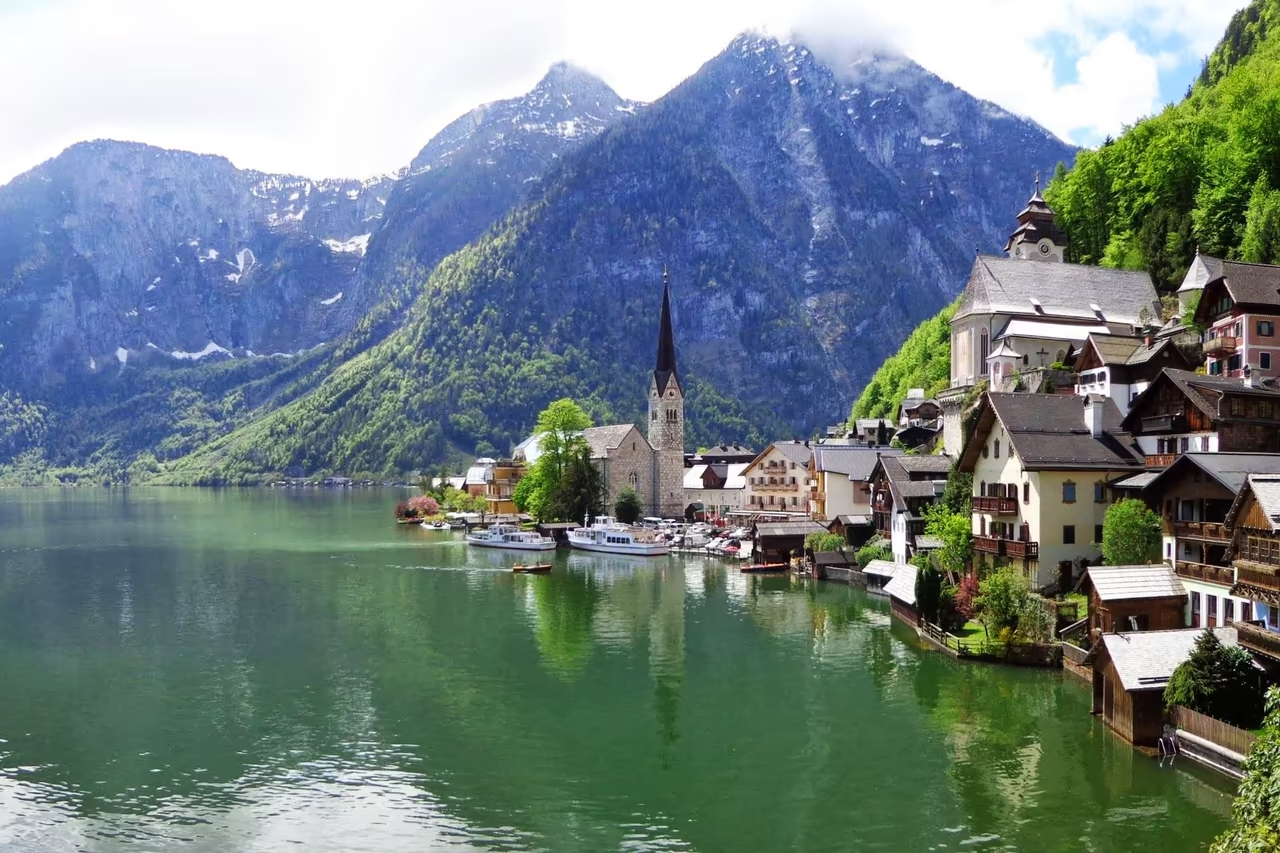
Hallstatt Day Trip from Salzburg
Hallstatt is one of Austria's most photographed villages and one of the easiest to mistime. Its official coach system requires booked arrival and departure slots to manage access to the tiny lakeshore core. That is not a reason to skip it; it is a reason to plan around the coaches rather than repeat an annual visitor estimate with no published counting method.
Do Hallstatt as a timed day trip from Salzburg — around the crowds, not into them. Tour coaches use the village's official slot system, so arrive before mid-morning or stay beyond the main coach peak. Both public-transport routes take about two and a half hours each way; confirm the current timetable before travel.
Affiliate disclosure: this page carries paid affiliate links. If you book through them, ElPremier may earn a commission at no extra cost to you. They do not influence what this page recommends.
Use the official coach system, not an unsupported annual total
Hallstatt's official coach system requires booked entry and exit slots. Our advice is to avoid the busy middle of the day; the slot rules themselves do not measure the hourly crowd peak. Annual totals repeated online do not publish a transparent counting method, so this guide does not use them to manufacture precision.
Go early or go late — the middle of the day is the thing everyone complains about
The coach-and-day-tour peak lands in the middle of the day, and almost every account of Hallstatt being ruined is an account of arriving at midday. Before roughly mid-morning and after the coaches leave in the late afternoon, the lakeshore, the Marktplatz and the classic view from the northern end are genuinely quiet. This single timing decision does more for the day than any other choice you make, and it is the entire reason to travel independently rather than on a coach — a tour with a midday stop gives you less freedom to avoid the peak. Check the actual itinerary; the slot system does not require every tour to arrive at midday. If you are on a tour, accept the crowds as the trade for not driving; if you are independent, use the timing advantage you have paid for with the extra effort.
The bus and train realism, and the ferry that is not optional
There are two honest routes from Salzburg and both take roughly two and a half hours each way, which is the fact that shapes the whole day. By rail you travel toward Attnang-Puchheim and down the Salzkammergut line to Hallstatt station, which sits across the lake — the connecting ferry to the village is a scheduled boat timed to trains, not a formality, and the last one back matters more than the last train. By bus, the Postbus route via Bad Ischl reaches the village directly and is often the simpler option, but it runs to a rural timetable that thins sharply outside the season. Either way you are committing about five hours to transit for a village you can walk in one, so check current ÖBB and Postbus times before fixing the plan rather than after.
Should you stay overnight? Usually not
The case for staying is real but narrow: you get the village early and late, when it is at its quietest. The case against is stronger for most trips: accommodation choice and evening life are limited, while Salzburg has far more rooms, food, and onward connections. Treat Hallstatt as a long day unless dawn photography is the point of the trip or you are continuing deeper into the Salzkammergut.
The questions people actually ask.
Use the short answers below to settle the practical details before you book.
How do you do Hallstatt as a day trip from Salzburg?
Go independently and time it: arrive before mid-morning or after the tour coaches leave in the late afternoon, because the midday coach peak is what every negative account describes. Both honest routes take about two and a half hours each way — rail toward Attnang-Puchheim and down the Salzkammergut line to a station across the lake, where a train-timed ferry completes the trip, or the Postbus via Bad Ischl. Check current ÖBB and Postbus times, and plan the last connection back first.
How crowded is Hallstatt?
The official coach slot system confirms that coach access is actively managed. Our timing advice is to avoid the busy middle of the day; this is not an hourly count derived from the slot system. Published annual estimates do not provide a transparent counting method, so use the coach pattern—not an unsupported total—to plan an early or later visit.
Should you stay overnight in Hallstatt?
Usually not. Accommodation choice and evening life are limited, while Salzburg has far more rooms, food, and connections. Treat Hallstatt as a long day unless dawn photography is the actual point or you are continuing deeper into the Salzkammergut.
Common mistakes that weaken the trip.
Rail and Postbus timetables, opening hours, cable-car and boat operation, and festival dates can change. Check the current detail with the linked operator.
Repeating an annual visitor estimate as a measured fact when its counting method is not published.
Arriving at midday with no plan and concluding the village is ruined, when what you booked was the peak coach-arrival window.
Missing the last ferry back to Hallstatt station, or assuming the rural Postbus timetable runs like an urban one outside the high season.
Booking a Hallstatt night by default. With limited accommodation choice and almost no evening life, Salzburg is the better base for nearly every trip.
Keep the Austria plan coherent.
Move between guides by decision type: which city, how many days, where to sleep, the Hallstatt day, and the lake base. Arriving via Munich? Our sister guide at munichguide.app covers that end of the corridor.
Salzburg or Vienna
Compare Salzburg and Vienna for museums, imperial sights, lakes and trip length — and see when one city or both fit your first Austria itinerary.
Salzburg or Innsbruck
Choose Salzburg for its baroque old town and Salzkammergut lake trips, or Innsbruck for the Nordkette and Tirol. Compare the sights and onward routes.
Where to Stay in Salzburg
Compare Salzburg's Altstadt, right bank, Nonntal and station area for atmosphere, value, day trips and the most practical hotel location.
Current details belong to official sources.
Timetables, opening hours, ticket prices, cable-car and lake-boat seasons, and festival dates change. Use this page for planning advice and the sources below for the current details.
- Hallstatt salt mine operating calendarCurrent mine and funicular operation, including the special closure and restricted funicular hours on 18 September 2026.
- Hallstatt coach and parking informationThe coach operator’s entry and exit slot rules, terminal and parking arrangements. These access rules do not measure hourly crowds or an annual visitor total.
- Salzkammergut TourismRegional visitor information for the lakes and villages across Hallstatt, Bad Ischl, the Wolfgangsee and Mondsee. The 2026 tourism-board merger covers the Upper Austrian destinations; Salzburg-side partners retain their own organisations.
- ÖBBAustrian rail: current timetables and fares for Salzburg–Vienna, Salzburg–Innsbruck, and the Salzkammergut line toward Hallstatt via Attnang-Puchheim.
- PostbusThe rural bus network that actually reaches the Salzkammergut villages: the Salzburg–Bad Ischl–Hallstatt corridor and the Wolfgangsee services, whose timetables thin outside the season.
- SalzweltenThe Hallstatt salt mine and the world's oldest salt mine tour, plus the Hallein and Altaussee mines: current opening, the funicular, and tickets.
- Dachstein SalzkammergutThe regional visitor portal for Dachstein Krippenstein, the 5fingers viewing platform and ice caves, with links to the operators for current cable-car and cave access.
How we verify
Every figure on this site is traced to a named source with its scope stated, and figures we could not verify are left out rather than estimated. Where a current annual total has no published counting method, we use practical official controls and timing advice instead.