Salzburg or Vienna
Vienna is the much bigger city, but bigger is not automatically better for your trip. Choose by how many urban days you have and whether you want a capital built around museums and imperial scale or a compact old town that opens onto lakes and mountains.
Choose Vienna for five or more urban days, major museums, imperial architecture, and the rhythm of a European capital. Choose Salzburg for two to four days, a walkable UNESCO old town, and the Salzkammergut lakes within day-trip range. At a week or more, take both on the ÖBB main line.
Vienna is the capital built for a longer urban stay
Vienna's scale buys things Salzburg cannot match: an imperial core built for an empire rather than an archbishopric, the Kunsthistorisches and the Belvedere, the Staatsoper, coffee-house culture as an institution, and enough museums for a week without repetition. If you want a major European capital and have five days or more, Vienna is the stronger answer. It is also the better first stop if you are arriving from farther east or if the trip is fundamentally urban.
Salzburg wins on compression and on what sits around it
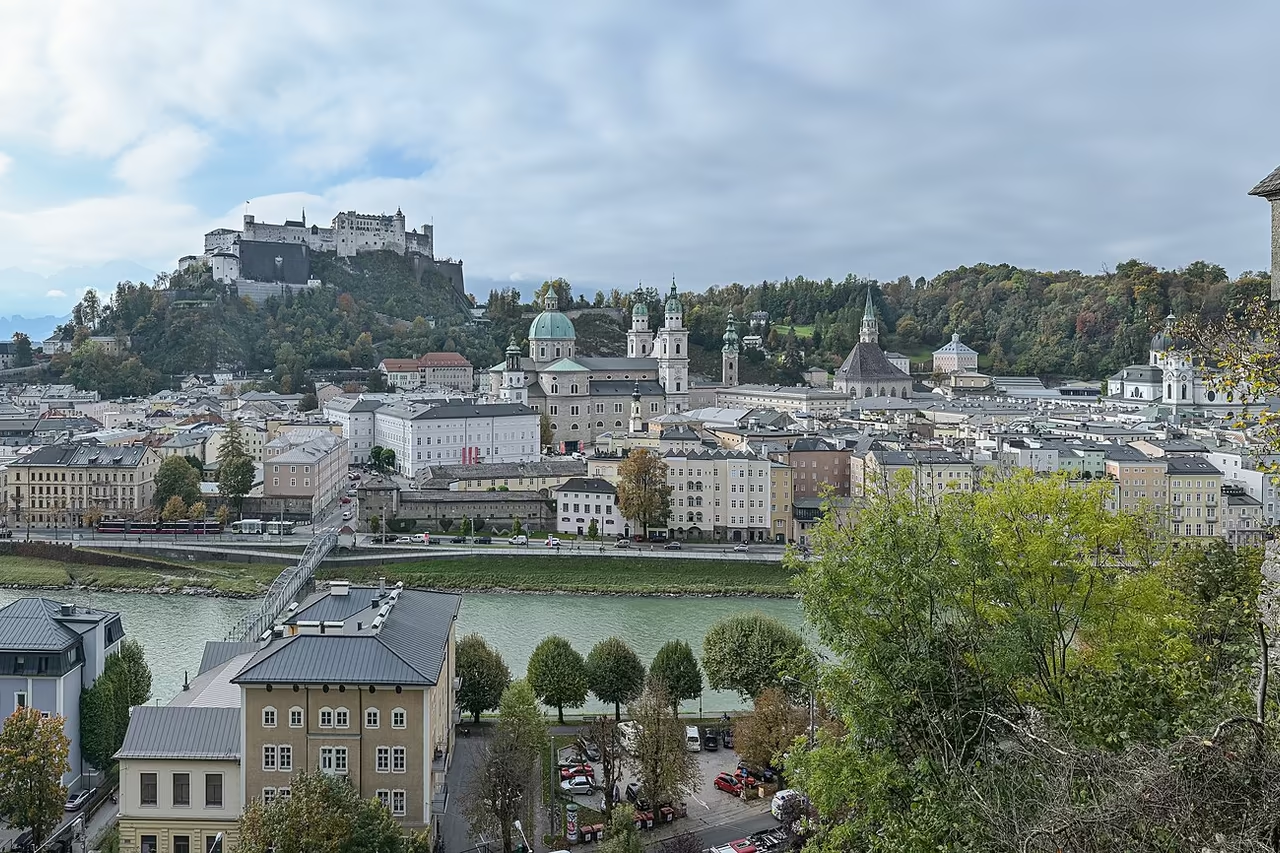
Salzburg's case is not that it out-museums Vienna. It puts a UNESCO baroque old town, the Hohensalzburg fortress, the Mozart houses, and the Sound of Music landscape inside a walkable core you can understand in two days, then opens onto the Salzkammergut lakes and the Alps within an hour. If your trip is part city and part mountains and lakes, Salzburg is the base that does both jobs, with Hallstatt, Bad Ischl, and the Wolfgangsee as day trips.
The distance is the real constraint — and the honest answer is often both
The two cities sit roughly 300 kilometres apart, linked by frequent ÖBB rail on one of Austria's main lines, at around two and a half to three hours. That is close enough that a trip of a week or more should usually stop being a choice: Vienna for the imperial and museum days, Salzburg for the compact old town and the lakes, with the train between them. The choice only genuinely bites at three or four days, when splitting means losing most of a day to transit and arriving twice. At that length, pick one — and pick by whether you want a capital or a basecamp. Check current times and fares with ÖBB rather than trusting a remembered figure.
The questions people actually ask.
Use the short answers below to settle the practical details before you book.
Salzburg or Vienna — which should I visit?
Vienna, if you have five days or more and want a full imperial capital with major museums and a deeper urban music layer. Salzburg, if you have two to four days, want a compact UNESCO old town rather than a metropolis, or want the Salzkammergut lakes and the Alps within day-trip range of your base.
How far is Salzburg from Vienna?
Roughly 300 kilometres, linked by frequent ÖBB rail on one of Austria's main lines at about two and a half to three hours. That is close enough that a trip of a week or more can hold both cities; under about four days, splitting costs most of a day in transit and neither lands. Check current times and fares with ÖBB before committing.
Is Vienna or Salzburg bigger?
Vienna, by a wide margin. It is a national capital and metropolis; Salzburg is a compact regional city whose old town can be covered on foot. The useful question is whether you want several museum-heavy urban days or a smaller city that also works as a base for lakes and mountains.
Common mistakes that weaken the trip.
Rail and Postbus timetables, opening hours, cable-car and boat operation, and festival dates can change. Check the current detail with the linked operator.
Assuming Salzburg is a scaled-down Vienna. They do different jobs: Vienna is a capital, Salzburg is a compact old town that doubles as a basecamp for lakes and mountains.
Trying to split three days between the two. You will lose most of a day to the 300km transfer and arrive twice, and neither city will land.
Treating Vienna as a lakes-and-mountains base. Its scenic day-trips are the Wachau and the Danube; the Alps and the Salzkammergut are Salzburg's ground, not Vienna's.
Keep the Austria plan coherent.
Move between guides by decision type: which city, how many days, where to sleep, the Hallstatt day, and the lake base. Arriving via Munich? Our sister guide at munichguide.app covers that end of the corridor.
Salzburg or Innsbruck
Choose Salzburg for its baroque old town and Salzkammergut lake trips, or Innsbruck for the Nordkette and Tirol. Compare the sights and onward routes.
Hallstatt Day Trip from Salzburg
Plan a Hallstatt day trip from Salzburg around the midday coach peak, the train-and-ferry or bus route, and the case for staying overnight.
Where to Stay in Salzburg
Compare Salzburg's Altstadt, right bank, Nonntal and station area for atmosphere, value, day trips and the most practical hotel location.
Current details belong to official sources.
Timetables, opening hours, ticket prices, cable-car and lake-boat seasons, and festival dates change. Use this page for planning advice and the sources below for the current details.
- Vienna Tourist BoardOfficial Vienna visitor information for museums, neighbourhoods, current openings, and the practical differences between a capital-city stay and Salzburg.
- Salzburg TourismThe official Salzburg city tourist board: current opening times, the Salzburg Card, the Mozart sites, guided tours, events, and visitor information for the Altstadt.
- ÖBBAustrian rail: current timetables and fares for Salzburg–Vienna, Salzburg–Innsbruck, and the Salzkammergut line toward Hallstatt via Attnang-Puchheim.
How we verify
Every figure on this site is traced to a named source with its scope stated, and figures we could not verify are left out rather than estimated. Where a current annual total has no published counting method, we use practical official controls and timing advice instead.